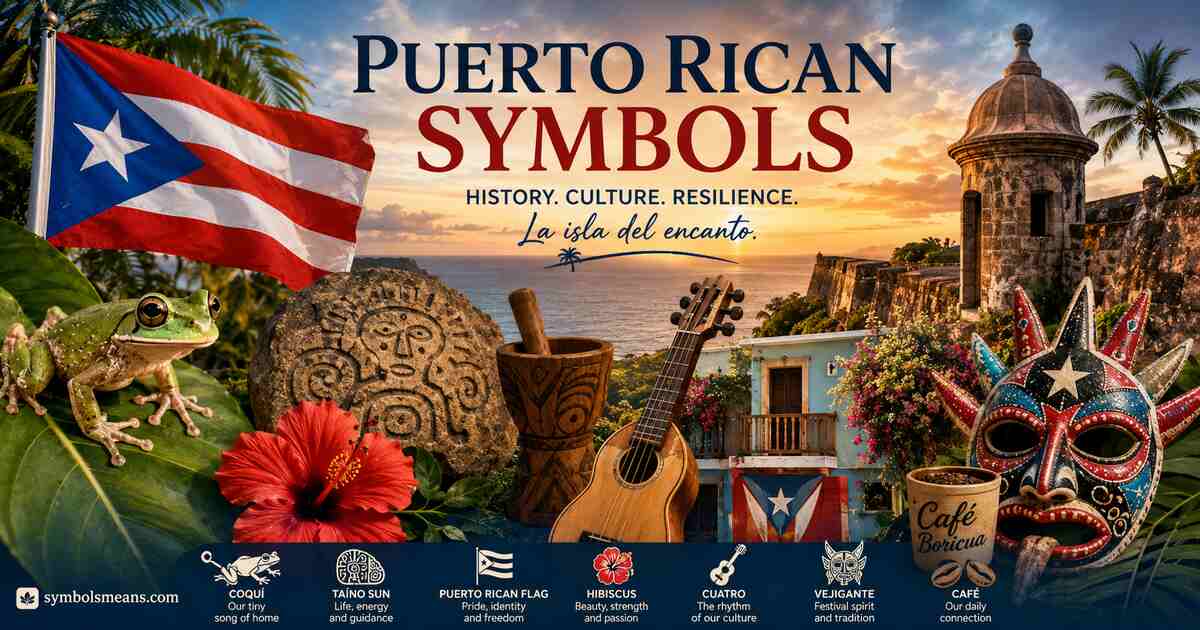
Puerto Rico speaks through its symbols. A tiny frog’s call at sunset, a sun carved into stone centuries ago, a flag once banned by law and now flown with pride, each one carries the island’s history in a single image. This guide breaks down the most meaningful Puerto Rican symbols, their Taíno roots, and what they still say about the island’s soul today.
What Are Puerto Rican Symbols?
Puerto Rican symbols are the images, animals, and icons that represent the island’s identity, history, and spirit. Some come from nature, like the coquí frog. Others come from Indigenous Taíno tradition, Spanish colonial history, or the everyday culture that Puerto Ricans carry with them, both on the island and across the diaspora.
What ties them together is emotional weight. These aren’t just decorative icons, they represent centuries of resilience, blending Taíno, Spanish, and African influence into something distinctly Boricua.
Puerto Rican Symbols And Their Cultural Meanings
Puerto Rican Symbols And Meanings
At their core, Puerto Rican symbols connect to family, history, and pride. The coquí frog represents home, the hibiscus represents beauty and island life, and Taíno carvings represent an ancestry that survived colonization.
Puerto Rican Symbols Tattoos
Tattoos are one of the most personal ways Puerto Ricans express identity. Popular choices include the coquí frog, the Taíno sun, the island’s flag, and tribal-style Taíno patterns, each carrying deep personal and ancestral meaning.
Taino Symbols And Meanings
Taíno symbols come from the island’s Indigenous people and typically represent nature, spiritual energy, and the bond between humans and the earth. Ancient carvings still influence Puerto Rican art and design today.
Puerto Rican Symbols Copy And Paste
For social media bios and captions, common text-friendly symbols include the flag emoji, sun icons, and frog emojis, used as quick, shareable expressions of island pride.
Puerto Rico Taino Symbols
These symbols were carved into stones, caves, and ceremonial objects long before written history, and continue to inspire modern jewelry, tattoos, and art.
Puerto Rico Taino Symbols Tattoos
Modern Taíno-inspired tattoos often blend the sun, turtle, and coquí frog into one design, honoring ancestry while representing wisdom and protection.
Famous Symbols That Represent Puerto Rico
Taino Sun Symbol Meaning
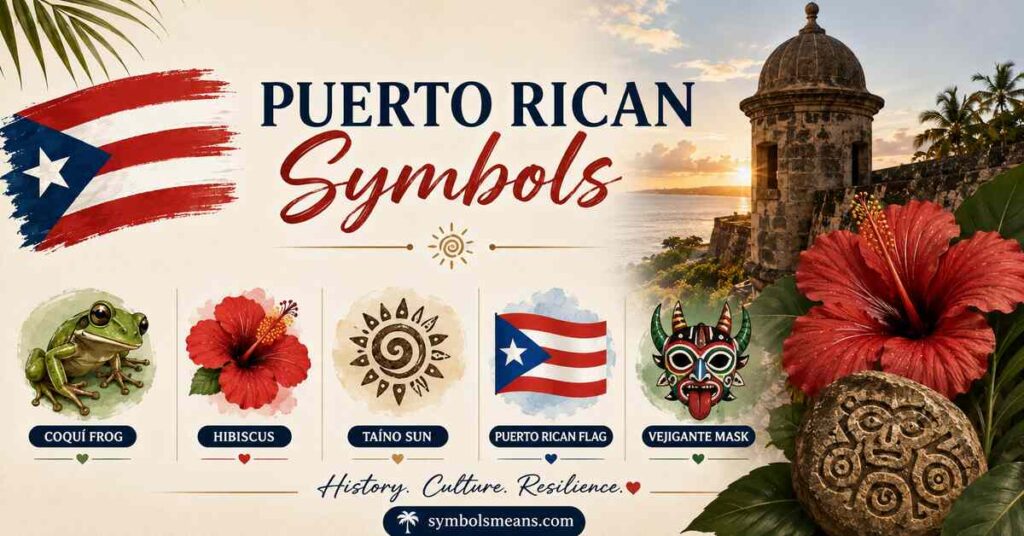
The Taíno sun represents life, energy, creation, and spiritual guidance. It was deeply tied to the natural cycles the Taíno people depended on for survival.
Puerto Rico Symbol Frog
The coquí frog, native only to Puerto Rico, is one of the island’s most beloved symbols, representing pride, home, and a voice that refuses to be small.
Puerto Rican Symbols Toa
In Taíno legend, children left without their mothers cried “toa, toa” until they transformed into frogs, a story often linked to the origin of the coquí’s haunting nighttime call.
Read More : 72+ Mental Health Symbols You’ve Seen But Never Truly Understood Finally Explained
Taino Puerto Rican Symbols
Beyond the coquí and sun, Taíno symbolism includes the turtle, the spiral, and carved zemí figures representing deities and ancestral spirits.
Puerto Rican Tattoos
Combining national pride with ancestral art, Puerto Rican tattoos often merge the flag’s colors with Taíno imagery for a design that’s both personal and historical.
Puerto Rican Taino Symbols
These symbols are respected for their spiritual and artistic weight, once used in ceremonies and storytelling, now appearing in fashion, murals, and jewelry.
Puerto Rico Symbols
The most recognized include the coquí frog, the flag, the royal palm tree, and Taíno artwork passed down through generations.
Symbols Of Puerto Rico
National icons like the flag and the coquí are known worldwide, while traditional Taíno symbols continue to represent deeper cultural roots.
Puerto Rican Protection Symbols
Many protective symbols come from Taíno spiritual belief, ancient communities believed certain carvings and designs could guard families from harm.
Traditional Puerto Rico Symbols And National Identity
Things That Represent Puerto Rico
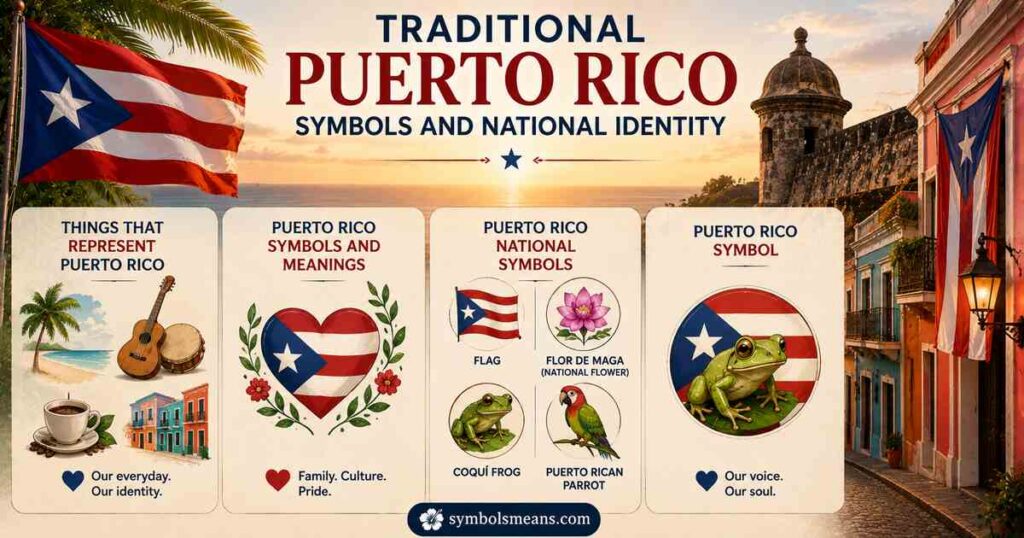
Beyond formal symbols, everyday elements like beaches, music, coffee, and colorful streets are just as much a part of the island’s identity as any official emblem.
Puerto Rico Symbols And Meanings
Family, culture, and national pride sit at the center of nearly every Puerto Rican symbol, whether it’s centuries old or a modern reinterpretation.
Puerto Rico National Symbols
Officially recognized symbols include the flag, the Flor de Maga (national flower), the coquí frog, and the Puerto Rican parrot.
Puerto Rico Symbol
If asked to name just one, most Puerto Ricans would point to either the flag or the coquí — both represent identity in a way words alone can’t capture.
Deep Symbolic Meaning
Puerto Rican symbols operate on more than one level. On the surface, they’re recognizable images. Underneath, they carry layered meaning shaped by three intertwined influences: Taíno spirituality, Spanish colonial history, and African resilience brought through the transatlantic slave trade. A single coquí tattoo can represent home, ancestry, and quiet defiance all at once which is exactly why these symbols carry so much emotional and political weight for the people who wear them.
Types and Variations of Puerto Rican Symbols
The Coquí Frog
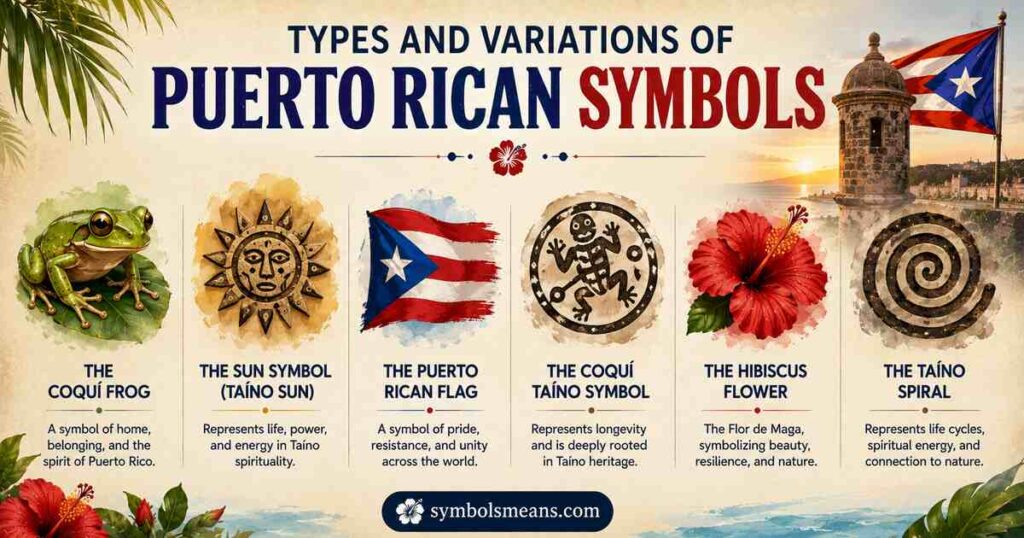
Small in size but loud in voice, the coquí is Puerto Rico’s most beloved symbol. The saying “de aquí como el coquí” — “I’m from here, like the coquí”, captures how deeply this tiny frog represents belonging and home.
The Sun Symbol (Taíno Sun)
Rooted in Taíno spirituality, the sun represents life, power, and energy, and remains one of the most widely used symbols in Puerto Rican tattoos and artwork today.
The Puerto Rican Flag
Once politically restricted under colonial rule, the flag has become a symbol of pride, resistance, and unity, carried proudly at parades and celebrations around the world.
The Coquí Taíno Symbol
The traditional Taíno depiction of the coquí, often shown encircled or mid-leap, represents longevity and is one of the most requested tattoo designs tied to Puerto Rican heritage.
The Hibiscus Flower
Known locally as the Flor de Maga, the hibiscus is Puerto Rico’s national flower, symbolizing beauty, resilience, and connection to the island’s natural landscape.
The Taíno Spiral
Found in ancient petroglyphs, spiral patterns are believed to represent life cycles, spiritual energy, and the ongoing connection between people and nature.
Puerto Rican Symbols Across Cultures
Puerto Rican symbolism is the product of three cultures layered on top of each other. Taíno spiritual imagery formed the foundation, Spanish colonization added religious icons like crosses and saints without fully erasing Indigenous meaning, and West African traditions brought new symbols, rhythms, and resilience through the transatlantic slave trade. The result is a symbolic identity that’s genuinely mixed, ancient and modern existing side by side rather than one replacing the other.
Puerto Rican Symbols in Art, Movies and Pop Culture
Puerto Rican symbols show up constantly in music, murals, and fashion, from Taíno-inspired jewelry to the flag appearing on everything from clothing to street art. The island’s largest cultural showcase, the Puerto Rican Day Parade in New York City, turns these symbols into a massive, shared celebration each year, carried by millions across the diaspora as a visible act of pride.
Spiritual and Dream Meaning of Puerto Rican Symbols
In Puerto Rican and Taíno-rooted belief, these symbols often carry spiritual weight beyond their visual meaning. The sun is tied to creation and life force, the coquí to voice and presence, and zemí figures to ancestral guidance. In dream interpretation shaped by this tradition, seeing these symbols is sometimes read as a message of protection or a reminder of one’s roots.
Positive vs Negative Meaning
Most Puerto Rican symbols carry proudly positive meaning, pride, resilience, and belonging. But some carry a harder history underneath them. The flag itself was once banned from public display during periods of political tension, turning a simple national emblem into an act of resistance whenever it was shown. Understanding that history adds weight to a symbol that might otherwise look purely celebratory.
Why Humans Are Attracted to Puerto Rican Symbols
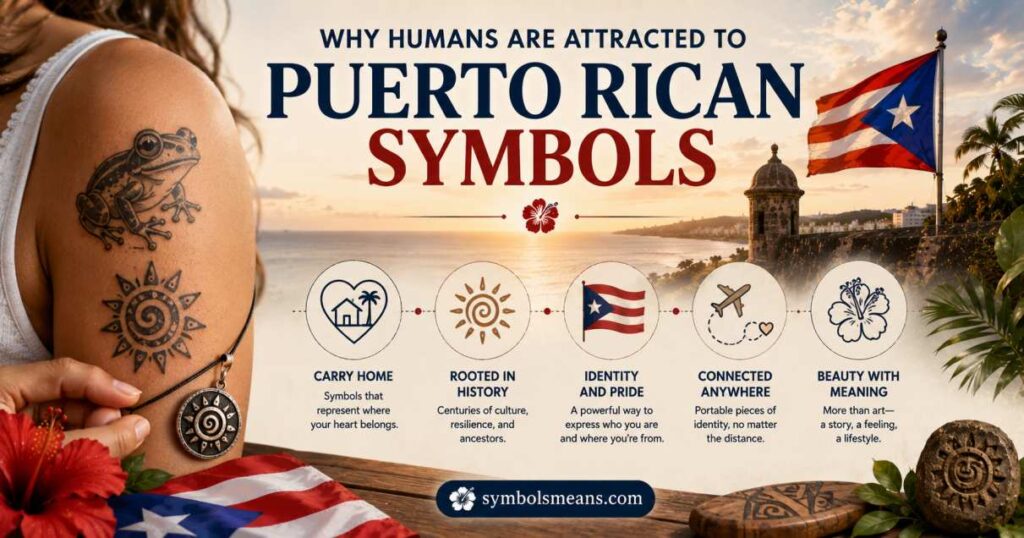
People connect with these symbols because they compress an entire history into something small enough to wear or carry. A coquí tattoo can say “I carry home with me” without a single word. For Puerto Ricans living far from the island, these symbols function as portable pieces of identity, a way to stay connected to a place and a culture even from thousands of miles away.
FAQs About Puerto Rican Symbols
What is the most important Puerto Rican symbol?
The Puerto Rican flag and the coquí frog are generally considered the two most important symbols of the island’s identity.
What does the coquí symbolize in Puerto Rico?
The coquí represents home, pride, and belonging, tied to the saying “de aquí como el coquí” — from here, like the coquí.
Are Puerto Rican symbols spiritual?
Many are, especially those rooted in Taíno tradition, which connected symbols like the sun and spiral to spiritual and natural forces.
Why are Taíno symbols important?
They preserve the legacy of Puerto Rico’s Indigenous people, whose culture survived colonization through art, language, and symbolism.
Can anyone use Puerto Rican symbols in tattoos?
Yes, though understanding the cultural and historical meaning behind a symbol before getting it is generally seen as a sign of respect.
Conclusion
Puerto Rican symbols carry far more weight than their simple shapes suggest. A coquí’s call, a sun carved centuries ago, a flag once forbidden, each one tells a story of survival, pride, and identity that has been passed down through generations. Understanding these symbols isn’t just cultural trivia; it’s a window into the true soul of the island.