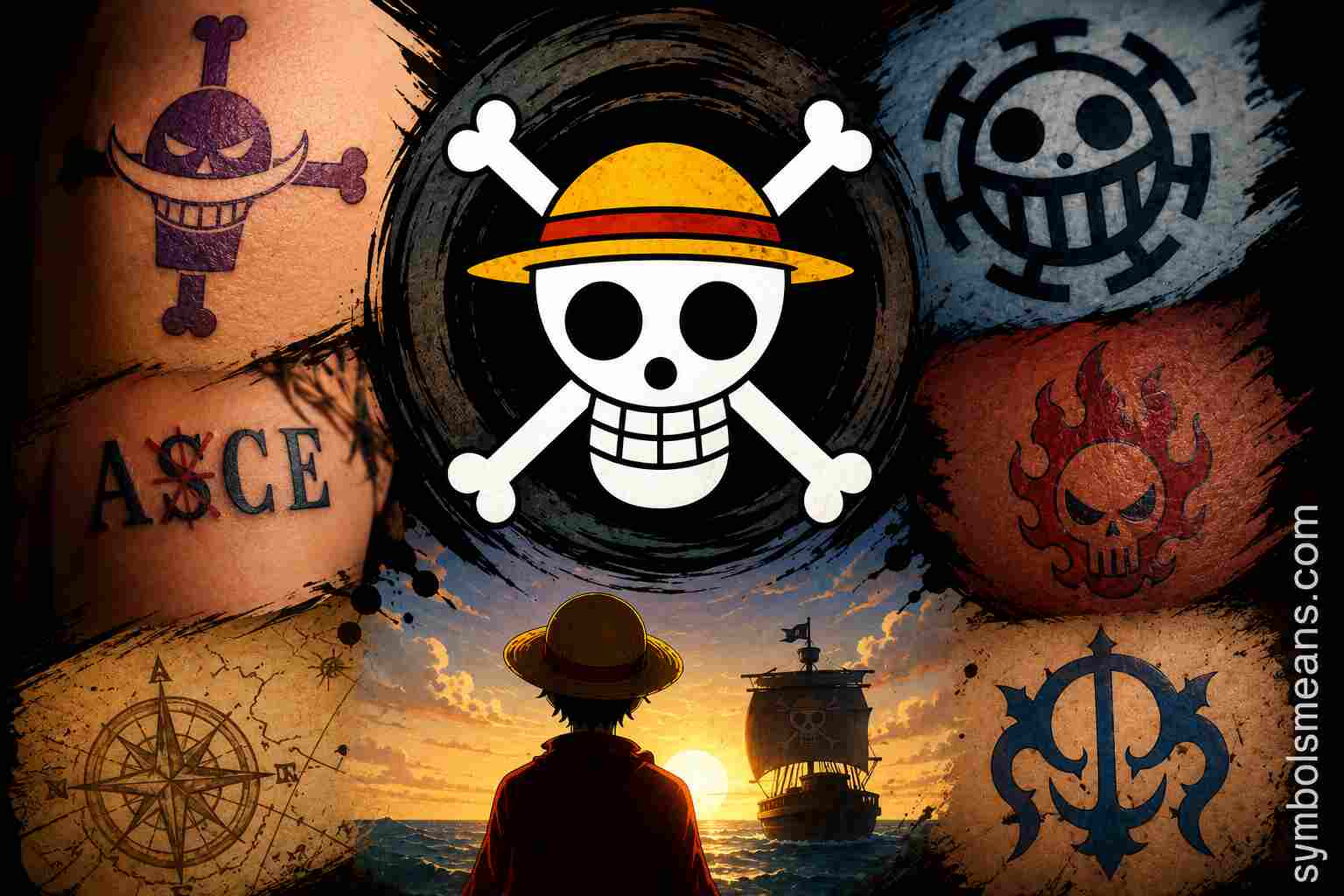
One Piece is more than a story about pirates chasing treasure, it’s a world built on symbols. Every Jolly Roger, every tattoo, and every crew emblem carries a story of loyalty, freedom, or loss. This guide breaks down the most important One Piece symbols, what they really mean, and why fans keep returning to them long after the credits roll.
What Are One Piece Symbols?
One Piece symbols are the visual marks, flags, tattoos, brands, and emblems, that represent a character’s identity, crew, or personal history within the series. A Jolly Roger tells you everything about a captain’s personality before a single word is spoken. A tattoo can carry the weight of a lost sibling. A brand can represent oppression, and a symbol drawn over it can represent defiance.
These aren’t just decorative details. Creator Eiichiro Oda uses them as storytelling shortcuts, letting a single image carry emotional weight that would otherwise take pages of dialogue to explain.
One Piece Symbols Guide, Text And Logos
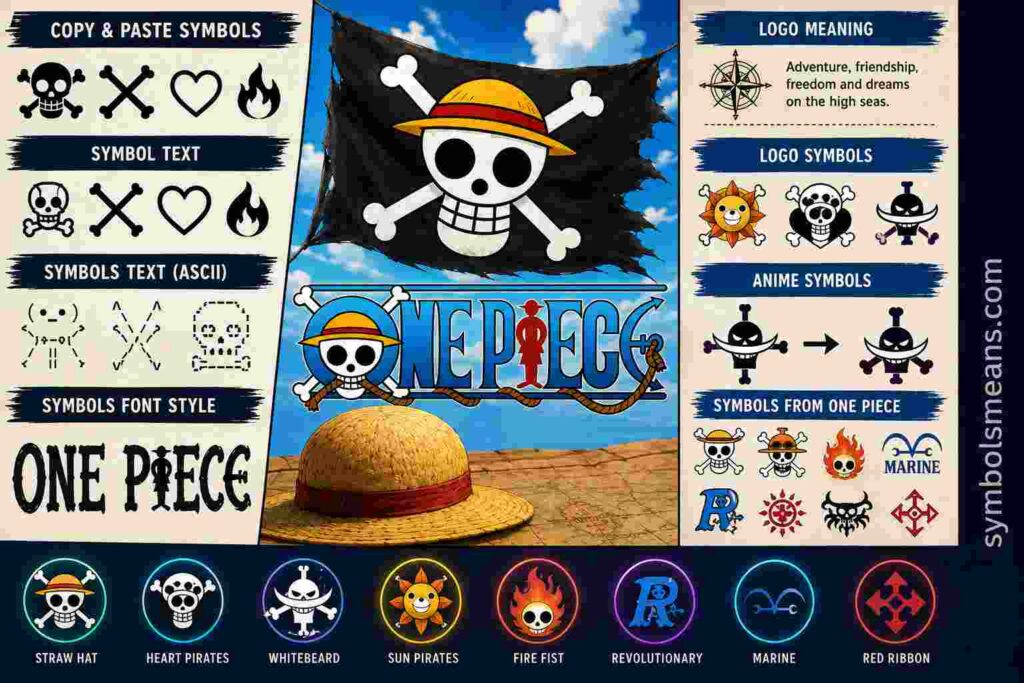
One Piece Symbols Copy And Paste
Fans frequently look for simple text and Unicode versions of iconic marks to use in usernames, bios, and social captions. Common copy-paste choices include the skull (☠), crossbones, and simplified heart or flame icons that echo well-known crew logos.
One Piece Symbol Text
Text-based versions of these symbols are popular in fan communities because they let people show crew loyalty without needing a full graphic file, a quick skull emoji or stylized lettering is often enough to signal the reference.
One Piece Symbols Font
Many fans also search for fonts that mimic the bold, hand-drawn look of the manga’s logo lettering, often used for fan art, merchandise mockups, or personal projects.
One Piece Symbols Text
Beyond emojis, some fans recreate flags and marks using keyboard characters and simple ASCII-style art, especially for forum signatures and chat profiles.
One Piece Logo Meaning
The official One Piece logo blends adventurous, bold typography with a skull motif, reflecting the series’ balance of high-stakes danger and lighthearted fun, a tone that defines the whole story.
One Piece Logo Symbols
Beyond the main title logo, individual volume covers and story arcs often feature crew-specific symbols worked into the design, reinforcing which characters or factions are central to that part of the story.
One Piece Anime Symbols
The anime adaptation occasionally alters symbol designs from the original manga for broadcast standards, most notably updating the Whitebeard Pirates’ emblem (more on this below).
Symbols From One Piece
From Jolly Rogers to secret brands, the symbols scattered throughout the series form a visual language that rewards long-time fans who notice recurring details across arcs.
Popular Pirate Flags And Crew Symbols In One Piece
One Piece Jolly Roger
A Jolly Roger in this world isn’t just a flag, it’s a declaration of who a crew is before they even speak. Every captain designs their own version of the classic skull and crossbones to reflect their personality and ambitions.
One Piece Flag Symbol
When a crew’s flag appears on the horizon, it sends an immediate message, fear, respect, or hope, depending on that crew’s reputation across the seas.
All One Piece Symbols
Fans searching for the full library of symbols are usually looking for a complete visual reference spanning dozens of crews, from the Straw Hats to Whitebeard’s forces and beyond.
One Piece Symbols Names
Recognizing symbols by name, the Straw Hat Jolly Roger, the Whitebeard Mark, the Sun Pirates emblem, helps fans track the deeper lore behind each crew’s identity.
Ace One Piece Symbols
Portgas D. Ace carried two of the most discussed symbols in the series: the Whitebeard emblem across his back and the “ASCE” tattoo on his bicep, both explored in more detail later in this guide.
Cool One Piece Symbols
Fan-favorite designs include the Heart Pirates’ spotted mark, the Whitebeard skull with its sweeping mustache, and Luffy’s minimalist straw-hat skull, each striking in a completely different way.
One Piece Anime Symbols
As noted earlier, certain symbols were modified between the manga and anime versions to avoid unintended real-world associations, most notably with Whitebeard’s emblem.
Symbols In One Piece
Symbols in this world extend beyond pirate flags entirely, brands, scars, and secret marks all carry narrative weight tied to specific arcs and character decisions.
Read More : 50+ Unique Symbols of Friendship That Reveal True Bond and Loyalty
One Piece Symbolism, Tattoos And Meanings
One Piece Symbols Tattoos
Tattoos in the series often represent chosen family and loyalty rather than decoration, which is part of why fans connect with them so strongly.
Tattoo One Piece Symbols
Among fans getting their own ink, the Straw Hat Jolly Roger, Ace’s ASCE lettering, and the Whitebeard emblem are consistently the most requested designs.
One Piece Symbols Tattoo
These tattoos tend to represent bigger themes — courage, found family, and the cost of freedom, making them feel personal rather than purely decorative.
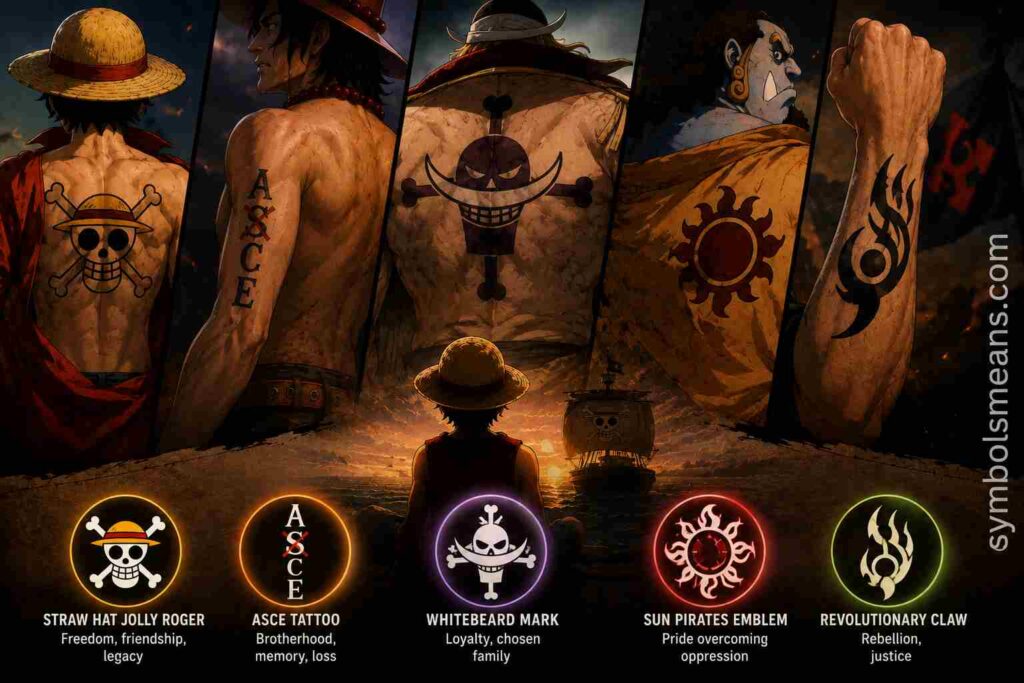
One Piece Symbols And Meanings
| Symbol | Character/Crew | Core Meaning |
|---|---|---|
| Straw Hat Jolly Roger | Luffy / Straw Hat Pirates | Freedom, friendship, legacy |
| ASCE Tattoo | Portgas D. Ace | Brotherhood, memory, loss |
| Whitebeard Mark | Whitebeard Pirates | Loyalty, chosen family |
| Sun Pirates Emblem | Fish-Man Pirates | Pride overcoming oppression |
| Revolutionary Claw | Revolutionary Army | Rebellion, justice |
One Piece Symbol Meaning
Each symbol operates on more than one level, visually striking on the surface, but tied to a specific emotional turning point underneath.
Symbolism In One Piece
Oda regularly uses physical marks to represent internal struggles, turning tattoos and brands into a visual shorthand for a character’s past.
One Piece Symbolism
This layered approach is part of why the series rewards rewatching, small design details often foreshadow major reveals later on.
Symbols One Piece
At its core, every symbol in this franchise exists to answer one question: what does this character or crew truly stand for?
Deep Symbolic Meaning of One Piece Symbols
Spiritual Level
On a spiritual level, many of these symbols represent transcendence, choosing an identity and a fate that goes beyond bloodline or birth circumstance, much like Ace and Luffy’s chosen brotherhood with Sabo.
Psychological Level
Psychologically, tattoos and marks in the story often represent processed grief or pride, giving characters a way to carry loss or loyalty visibly rather than silently.
Cultural Level
Culturally, these symbols mirror real-world pirate history, where flags and marks were used to communicate reputation and intent long before written communication was practical at sea.
Types and Variations of One Piece Symbols
1. The Straw Hat Jolly Roger
A simple skull wearing Luffy’s signature straw hat, with crossed bones beneath it. The hat itself represents a promise and a legacy passed down from Shanks, softening the traditional skull imagery into something personal and hopeful.
2. Ace’s “ASCE” Tattoo
According to the official databook One Piece Green: Secret Pieces, the tattoo is essentially Ace’s own name, with the crossed-out “S” honoring Sabo, who Ace believed had died. It stands as one of the most emotionally loaded symbols in the entire series.
3. Whitebeard Pirates’ Cross-Like Emblem
The Whitebeard Pirates’ Jolly Roger features a mustached skull behind crossed bones. In the early manga, this emblem was originally drawn using a manji design, a traditional Buddhist symbol. Because of its visual resemblance to the Nazi swastika outside of Japan, Toei Animation altered it for the anime, and the manga’s publisher later updated the design across all releases as well.
4. Fish-Man Sun Pirates Mark
Members of the Sun Pirates use a sun emblem to cover the slave brand once used to mark Fish-Men and merfolk as property, transforming a symbol of oppression into one of pride.
5. Dragon’s Claw (Revolutionary Army)
The Revolutionary Army’s mark represents rebellion against the World Government, standing for justice and change rather than personal gain.
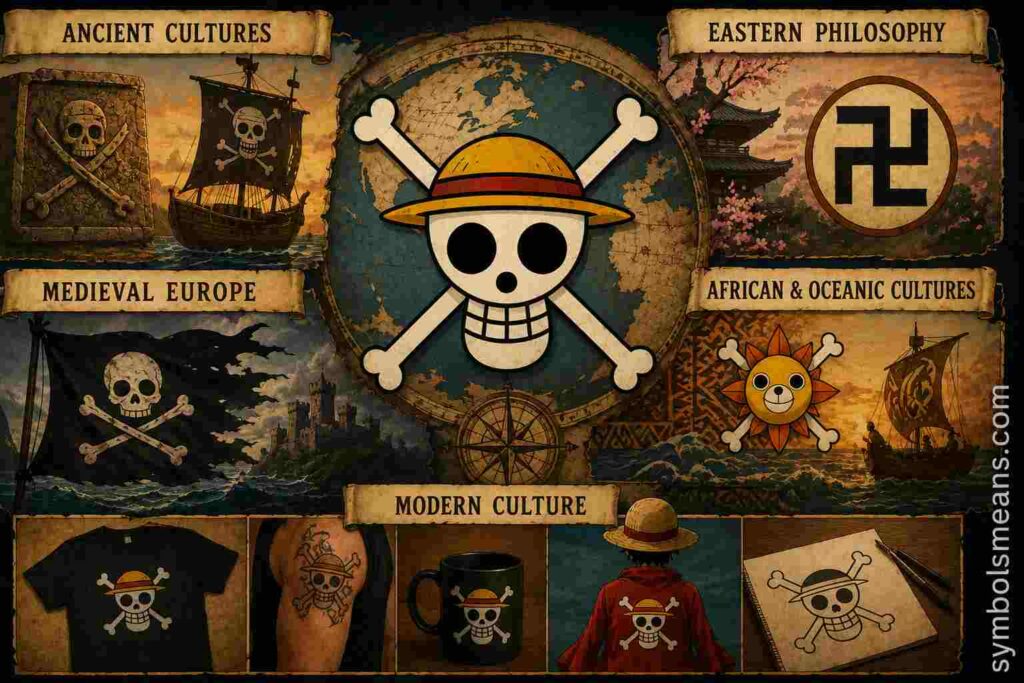
One Piece Symbols Across Cultures
Ancient Cultures
Skull-and-crossbones imagery echoes centuries of maritime tradition, where similar marks warned of danger or signaled a ship’s allegiance.
Eastern Philosophy
The original manji design used for Whitebeard’s crew draws directly from East Asian symbolism, where the mark traditionally represents good fortune rather than the meaning it carries in other parts of the world.
Medieval Europe
Classic pirate flag design, skulls, bones, and bold black-and-white contrast — traces back to European maritime history, which One Piece leans on heavily for its Jolly Roger tradition.
African & Oceanic Cultures
Themes of found family, oral legacy, and communal identity — reflected in crews like the Sun Pirates, echo storytelling traditions found across African and Pacific Island cultures.
Modern Culture
Today, these symbols have become globally recognized shorthand, appearing on merchandise, tattoos, and fan art worldwide.
One Piece Symbols in Art, Movies & Pop Culture
One Piece’s symbols have moved far beyond the manga page, appearing in fan art, cosplay, clothing lines, and even mainstream tattoo culture. Their popularity comes down to simplicity paired with meaning, a viewer doesn’t need to know the full backstory to feel that a symbol represents something important, even before learning why.
Spiritual and Dream Meaning of One Piece Symbols
Within fan interpretation, these symbols are often associated with personal transformation, much like Luffy’s own journey, seeing a Jolly Roger or crew mark in a dream context is sometimes read as a sign of chasing a long-held goal or embracing a found-family bond.
Positive vs Negative Meaning
Positive Meanings
- Loyalty and chosen family
- Freedom and self-determination
- Resilience through grief or loss
- Pride overcoming past oppression
Negative Meanings
- Brands and marks used by the World Government represent control and dehumanization
- A defaced or destroyed flag can symbolize a crew’s defeat
- Misused or misunderstood symbols (like the original Whitebeard design) show how imagery can carry unintended weight outside its original context
Why Humans Are Drawn to One Piece Symbols
People connect with these symbols because they compress huge emotional arcs into a single image. A tattoo that took Oda one panel to draw can represent years of friendship, loss, and identity, and that efficiency is exactly what makes visual storytelling so powerful. Fans also gravitate toward the idea of “found family” symbols because they reflect a very real, universal desire to belong somewhere by choice.
FAQs About One Piece Symbols
1. What is the most important One Piece symbol?
The Straw Hat Jolly Roger is widely considered the most iconic, representing Luffy’s entire journey and values.
2. Are One Piece symbols based on real history?
Yes, many draw from real maritime pirate flag traditions and East Asian symbolism, like the original manji-based Whitebeard emblem.
3. Why are tattoos so important in One Piece
Tattoos often represent chosen family, loyalty, and personal history, giving characters a permanent way to honor people or crews they love.
4. Is the Whitebeard symbol controversial?
Its original manji design was changed in later releases due to its resemblance to the Nazi swastika outside of Japan, where the symbol has a very different, unrelated meaning.
5. What does the sun symbolize in One Piece?
For the Sun Pirates, the sun emblem covers an old slave brand, turning a mark of oppression into a symbol of pride.
6. Why do fans get One Piece symbol tattoos?
Fans often choose these tattoos because they represent universal themes like brotherhood, freedom, and resilience, not just fandom.
Conclusion
One Piece symbols work because they say more than words ever could, a flag, a tattoo, or a mark carries entire histories of loyalty, loss, and identity in a single image. Whether it’s Luffy’s straw-hat skull or Ace’s ASCE tattoo, these designs have stayed powerful because they represent something every fan understands: the choice to define your own family, freedom, and legacy.