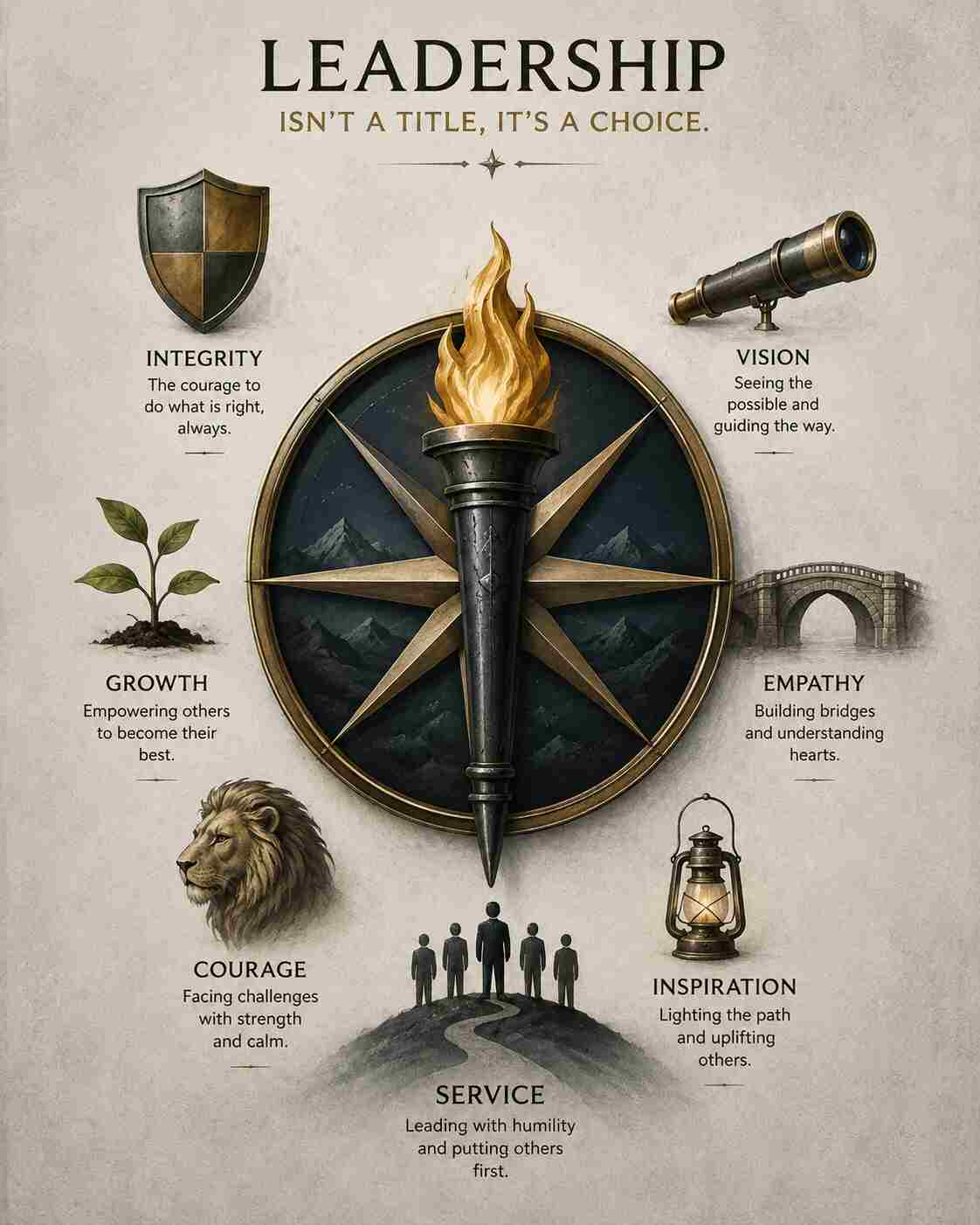
Throughout human history, leaders have never relied on words alone. From the pharaoh’s golden crown to the eagle etched on a military badge, certain symbols have crossed centuries, cultures, and continents to communicate one clear message: authority, guidance, and strength. These symbols didn’t fade with the empires that created them, they evolved. And today, they still shape how we recognize, understand, and inspire leadership.
Whether you’re a student of history, a designer looking for leadership symbol images, or a leader searching for your own visual identity, this guide covers every major category of leadership symbolism you need to know.
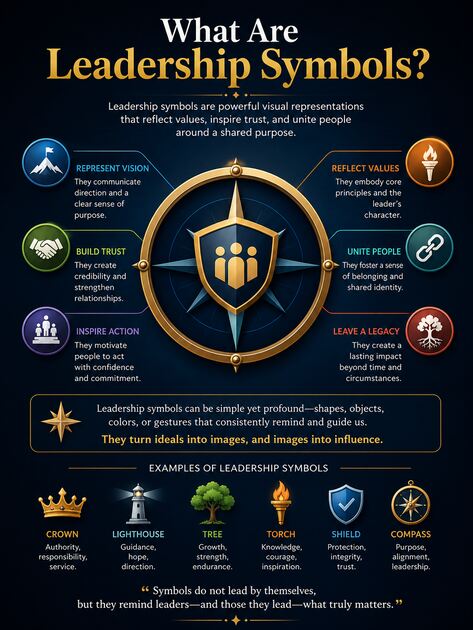
What Are Leadership Symbols?
A leadership symbol is any object, animal, image, color, or design that societies collectively recognize as a marker of authority, direction, or power. These symbols work instantly, no explanation required.
Leadership symbols serve three core functions:
- Legitimize authority : they tell others who holds power and why
- Inspire loyalty : they give followers something visual to rally around
- Communicate values : they express what a leader or organization stands for
According to research cited by Harvard Business Review, 70% of global leaders rely on symbolic artifacts and literature to foster leadership qualities within their teams. That’s not coincidence, that’s thousands of years of human psychology at work.
Leadership Symbols And Meanings Across Cultures And History
No symbol exists in a vacuum. Each one carries layers of cultural, historical, and emotional meaning. Understanding those layers is what separates decorative design from genuine symbolic leadership.
Symbols Of Leadership With Meaning
| Symbol | Core Meaning | Cultural Origin |
|---|---|---|
| Crown | Authority, sovereignty, responsibility | Universal |
| Lion | Courage, strength, protective instinct | Africa, Europe, Middle East |
| Eagle | Vision, freedom, divine connection | Americas, Rome, Egypt |
| Torch | Inspiration, knowledge, guiding light | Greece, modern worldwide |
| Compass | Direction, purpose, strategic thinking | Modern global |
| Anchor | Stability, groundedness under pressure | Maritime, early Christianity |
| Phoenix | Resilience, transformation, comeback | Egypt, China, Greece |
| Throne | Seat of power, command center | Universal monarchies |
| Scepter | Decision-making authority, final say | Egypt, Europe, Asia |
| Laurel Wreath | Triumph, honor, earned achievement | Ancient Greece and Rome |
Symbols Of Leadership In Education
In academic and educational settings, leadership symbols shift toward wisdom and guidance. Common examples include:
- The owl, representing wisdom and scholarly authority
- The torch, symbolizing the passing of knowledge from teacher to student
- The oak tree, reflecting endurance and deep-rooted learning
- The compass, pointing students and institutions toward purposeful direction
- Coat of arms designs on university crests, blending heritage with institutional identity
Symbols Of Leadership
The broadest category of leadership symbols spans objects, animals, colors, and cultural icons. Purple has represented leadership since ancient times, the dye was so rare and costly that only the wealthiest rulers could afford it, making it a visual shorthand for supreme authority. That association holds today in branding, ceremonial dress, and even royalty.
Visual And Creative Leadership Symbol Designs
Symbol Of Leadership Images
The most universally recognized leadership symbol images include the crown, the lion, the eagle, the laurel wreath, the staff, the throne, and the flag. These appear across every culture and era because they tap directly into human psychology around strength, guidance, and authority.
Pictures Of Leadership Symbols
Visual representations of leadership appear in:
- Motivational posters and books featuring mountain peaks, compasses, and lighthouses
- Corporate branding using shields, eagles, and lions in company logos
- Educational materials where torch imagery reinforces the ideal of enlightened leadership
- Government and military insignia combining crowns, eagles, and stars
Leadership Symbols Images
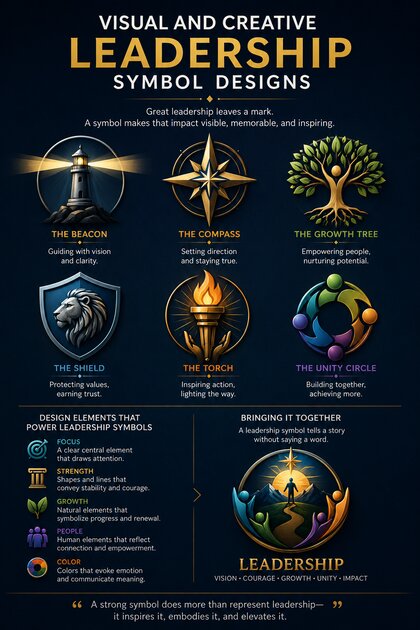
When designers create leadership imagery, they consistently draw from a shortlist of proven visual elements: elevated positioning (the leader stands higher), strong silhouettes, bold clean lines, and imagery borrowed from nature or ancient history.
Leadership Symbols Black And White
In black and white format, common in tattoos, emblems, logos, and official seals — leadership symbols take on a timeless, authoritative quality. The absence of color forces the design to rely on shape and form alone, which makes symbols like the crown, eagle, and compass especially powerful in monochrome applications.
Leadership Symbols Clip Art
For presentations, reports, and training materials, leadership symbol clip art typically draws from the following categories:
- Royal symbols (crowns, scepters, thrones)
- Animal symbols (lions, eagles, wolves, elephants)
- Navigational symbols (compasses, lighthouses, stars)
- Nature symbols (oak trees, mountains, phoenixes)
- Modern organizational symbols (chess pieces, handshakes, shields)
Leadership Symbol Designs In Art And Personal Expression
Leadership Symbol Drawing
In artistic illustration, leadership symbols follow recognizable patterns. Artists communicate authority through:
- Scale : the leader or their symbol appears larger than others
- Elevation : crowns, eagles, and mountains all point upward
- Light : torches, stars, and lighthouses emit light, drawing the eye
- Symmetry : balanced compositions signal stability and control
Leadership Symbol Tattoo
Leadership symbol tattoos are among the most popular choices for people in positions of authority, military service, or personal transformation. Top choices include:
- The lion : courage, strength, and natural dominance
- The crown : earned authority and personal sovereignty
- The eagle : freedom, vision, and decisive action
- The phoenix : resilience and the ability to rise from failure
- The sword : decisiveness and the willingness to protect
Each tattoo carries a distinct aspect of strength and authority. The phoenix is especially popular among leaders who have navigated major setbacks, as it captures the truth that real authority is built through difficulty.
Logo Leadership Symbols
Modern corporate logos borrow extensively from historical leadership symbolism. The lion appears in the logos of hundreds of financial institutions, law firms, and government organizations. Eagles dominate military insignia and national crests. The shield communicates protection and trust — a reason it appears in insurance, banking, and security branding worldwide.
Historical And Cultural Leadership Symbols
Ancient Symbols Of Leadership
Some of the oldest leadership symbols on record come from ancient Egypt, Mesopotamia, and early China. These civilizations understood that leadership needed to be made visible — something followers could see and believe in.
Key ancient symbols include:
- The Crook and Flail (Egypt) : tools of a shepherd and farmer, representing guidance and provision
- The Ankh : symbol of divine life force and spiritual authority
- Thunderbolts : wielded by Zeus and Thor in mythology, representing supreme command
- The Dragon (China) : power, wisdom, and imperial authority dating back thousands of years
- The Tabono (West Africa) : four interconnected oars representing unified leadership toward a shared goal
Ancient Leadership Symbols
Ancient societies used leadership symbols not just decoratively but functionally , to legitimize rulers, signal divine favor, and create psychological distance between leaders and the governed. Court ceremonials formalized this distance. Bowing, prostration, and special colors like imperial purple all reinforced who held power.
Coat Of Arms Leadership Symbols
Heraldic coat of arms designs remain one of the most complex and meaningful leadership symbol systems ever developed. Each element , the shield, the helm, the supporters, the motto — tells a specific story about a family’s values, history, and authority.
Common coat of arms leadership elements include:
- Lions rampant (courage in action)
- Eagles displayed (power and vision)
- Crossed swords (military leadership and defense)
- Oak branches (endurance and wisdom)
- Stars (destiny and divine guidance)
- Read More : 85+ Powerful Life Symbols and Their Deep Meanings That Will Change Your Perspective
Objects And Things That Represent Leadership
Objects That Represent Leadership
Everyday and ceremonial objects have long served as physical extensions of a leader’s authority:
- The crown : wearable authority; the most universally recognized leadership object worldwide
- The scepter : authority made physical; holding it was a public declaration of final power
- The sword : decisiveness and the leader’s role as protector
- The compass : direction, purpose, and strategic thinking
- The chess king : strategy, patience, and the long game of leadership
Objects That Represent Leadership Styles
Different objects map to different styles of leadership:
| Leadership Style | Representative Symbol |
|---|---|
| Authoritative | Crown, Throne, Scepter |
| Servant | Shepherd’s Crook, Open Hands, Anchor |
| Strategic | Chess Pieces, Compass, Lighthouse |
| Transformational | Phoenix, Torch, Rising Star |
| Military | Shield, Sword, Eagle |
Items That Represent Leadership
Items that represent leadership span the practical and the ceremonial: a military badge, a CEO’s corner office, a company logo, a presidential sash, or even a specific phrase or gesture. The common thread is collective recognition, the item signals leadership to everyone in the room without a word spoken.
Things That Symbolize Leadership
Nature offers powerful leadership metaphors. Mountains represent the summit that must be reached. The oak tree’s deep roots symbolize stability while its height conveys presence. The lighthouse guides others through uncertainty without moving itself, a perfect image for calm, steady leadership.
Things That Represent Leadership
Things that represent leadership exist in every domain of human life:
- In nature: mountains, oak trees, lions, eagles, storms
- In culture: crowns, thrones, flags, coats of arms
- In business: corporate logos, corner offices, trophies, company badges
- In religion: staffs, mitres, shepherd’s crooks, sacred animals
Leadership Symbols In Power, Strength, And Control
Leader Symbols / Symbol Of A Leader
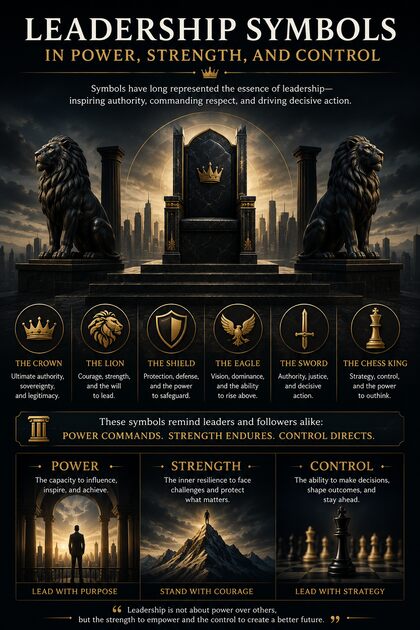
The symbol of a leader often reflects a combination of responsibility, courage, and guidance. No single image captures all of leadership , that’s why the most powerful leaders historically surrounded themselves with multiple symbols working together.
Symbol For Leadership / Symbols For Leadership
The most enduring leadership symbols share these design characteristics:
- Bold, clean lines
- Strong silhouettes instantly readable at a distance
- Imagery borrowed from nature, religion, or ancient history
- Upward orientation (crowns, flames, mountains, eagles in flight)
Symbols That Represent Leadership
A complete leadership symbol library includes:
- Natural Symbols: Lion, Eagle, Wolf, Elephant, Dragon, Phoenix, Oak Tree, Hawk
- Object Symbols: Crown, Scepter, Sword, Staff, Throne, Torch, Scales, Shield
- Cultural Symbols: Laurel Wreath, Ankh, Tabono, Hamsa, Coat of Arms
- Modern Symbols: Corporate Logo, Badge, Flag, Medal, Chess King, Compass, Lighthouse
Leadership Symbolism / Symbolism For Leadership
Leadership symbolism explains how icons communicate complex ideas instantly. A torch doesn’t need a caption to mean “inspiration.” A crown doesn’t need a label to mean “authority.” This efficiency is exactly why symbolism matters — it speaks before words can.
Specialized Leadership Symbol Categories
Symbols That Represent Control
Symbols of control tend to emphasize hierarchy and final authority: the throne (elevated above all others), the scepter (held by one hand alone), and the gavel (the final word in any decision). Purple as a color and gold as a metal both historically represented unquestioned control.
Strength Leadership Symbols
The strongest leadership symbols in visual culture draw directly from the animal kingdom:
- Lion : courage and natural dominance
- Bull : unstoppable forward momentum
- Bear : protective strength and fierce defense
- Wolf : pack leadership and tactical intelligence
- Eagle : aerial superiority and long-range vision
Military Leadership Symbols
Military leadership symbols emphasize discipline, hierarchy, and collective identity:
- Stars and stripes on rank insignia
- Eagles on national military seals
- Shields on unit patches
- Swords and crossed rifles on regimental badges
- Banners and pennants historically serving as rallying points on the battlefield
Servant Leadership Symbols
Servant leadership — the model where the leader exists to serve the team — has its own distinct symbol set:
- The shepherd’s crook (guiding and protecting, not commanding)
- The open hands (collaborative and giving)
- The handshake (partnership over hierarchy)
- The anchor (providing stability so others can move freely)
- The lighthouse (guiding from a fixed point without controlling the journey)
Leadership Symbols Animals
Animals have represented leadership across virtually every culture in human history. The most enduring include:
| Animal | Leadership Quality |
|---|---|
| Lion | Courage, authority, protection |
| Eagle | Vision, freedom, divine connection |
| Dragon | Power, wisdom, transformation |
| Elephant | Memory, patience, immovable strength |
| Hawk | Focus, precision, decisive action |
| Wolf | Pack loyalty, tactical intelligence |
| Phoenix | Resilience, transformation, rebirth |
Deep Symbolic Meaning of Leadership Symbols
Spiritual Meaning
Across religious traditions, leadership symbols carry divine weight. The shepherd’s crook appears in both Egyptian pharaonic regalia and Christian bishop iconography — representing a leader who guides and protects their flock. The ankh connects leadership to life-giving power. The star guided ancient peoples and appeared on royal seals as a marker of destiny and divine favor.
Psychological Meaning
Psychologically, leadership symbols tap into the human need for certainty and direction. When people see a crown or a lion, their brain processes it as an authority signal — instantly and without conscious reasoning. This is why leadership symbols remain so effective in branding, military culture, and politics: they bypass analytical thinking and speak directly to emotion and instinct.
Cultural Meaning
Culturally, leadership symbols are mirrors. They reflect what each society values most in its leaders. Warrior cultures glorify the sword and shield. Agricultural societies elevate the crook and scales. Democratic societies favor the handshake, the open hand, and symbols of collective purpose rather than individual dominance.
Types and Variations of Leadership Symbols
Crown
The crown is the single most universally recognized leadership symbol across cultures and history. It represents not just power but the weight of responsibility that comes with it. Variations include the laurel wreath (earned merit), the papal tiara (spiritual authority), and the military beret (earned rank).
Lion
The lion is the most widely used animal symbol of leadership worldwide. It embodies courage, strength, and the protective instinct of a natural leader. In African cultures, it is the king of the jungle. In European heraldry, it appears on more coats of arms than any other animal.
Eagle
The eagle represents aerial superiority, long-range vision, and freedom. It is the national symbol of the United States, Germany, Mexico, and dozens of other nations. In Native American tradition, it serves as a messenger between humans and the divine.
Throne
The throne is more than a seat. Its elevation, position, and design send deliberate messages about the person sitting in it. In modern contexts, the corner office and the head of the boardroom table serve the same symbolic function.
Staff or Scepter
The scepter is authority made physical. From the Egyptian crook and flail to the bishop’s pastoral staff, the act of holding a staff publicly declares: this person makes the final call.
Flag
Flags function as portable leadership symbols — carried into battle, raised over claimed territory, and flown above seats of government. They create collective identity and signal group allegiance at a glance.
Leadership Symbols Across Cultures
Ancient Egypt
Egyptian pharaohs used the crook (guidance), the flail (provision), the ankh (divine life), and the double crown (unified rule over Upper and Lower Egypt). The hawk god Horus — depicted as a divine protector-ruler — remains one of history’s most sophisticated leadership symbols.
Ancient Greece
Greeks favored the laurel wreath (earned triumph), the owl (wisdom and strategic thinking), the thunderbolt (supreme power, associated with Zeus), and the olive branch (peaceful authority and prosperity).
China
Chinese imperial leadership centered on the dragon as the ultimate symbol of power, wisdom, and divine mandate. The phoenix represented the empress and transformation. Together, dragon and phoenix symbolized the balance of forces in harmonious leadership.
Medieval Europe
Medieval European leadership symbols combined Christian and royal iconography: crowns, coats of arms, the sword of justice, the orb and scepter, and the color purple. Heraldic shields told entire leadership stories in a single visual.
Modern Society
Today’s leadership symbols include corporate logos, military badges, presidential seals, national flags, and emerging symbols like the compass (strategic direction), the lighthouse (guiding through uncertainty), and the chess king (strategic thinking and long-term vision).
Leadership Symbols in Art, Movies and Pop Culture
Leadership symbols permeate film and popular culture. The lion in The Lion King draws directly from ancient African and European leadership symbolism. The throne in Game of Thrones became one of television’s most loaded symbols of power, cost, and corruption. The shield of Captain America blends military protection symbolism with servant leadership ideals. In The Lord of the Rings, the crown of Gondor represents both the burden and the destiny of true leadership.
These modern reinterpretations keep ancient symbols alive and relevant for new generations — proof that the core human associations between certain images and the concept of leadership remain remarkably stable.
Spiritual and Dream Meaning of Leadership Symbols
Dreaming of leadership symbols typically signals emerging personal authority, growing responsibility, or an inner call to step into a leadership role. Psychologists and dream interpreters consistently associate:
- Crowns in dreams — recognition, personal sovereignty, or fear of responsibility
- Lions in dreams — inner courage being called forward
- Eagles in dreams — rising above a current situation for broader perspective
- Thrones in dreams — awareness of one’s own authority or desire for recognition
- Torches in dreams — inspiration arriving, or the call to guide others
Positive vs Negative Meaning of Leadership Symbols
Positive Meaning:
- Authority without arrogance — the crown as responsible stewardship
- Strength in service — the lion protecting its pride, not just dominating it
- Vision and guidance — the lighthouse and compass pointing the way
- Resilience and transformation — the phoenix rising stronger than before
- Collective unity — the Tabono’s four oars working as one
Negative Meaning:
- Tyranny — the crown worn without accountability
- Aggression — the sword wielded to oppress rather than protect
- Domination — the throne elevated to separate rather than serve
- Intimidation — symbols used to fear followers into compliance
- Exclusion — symbols that mark some as leaders while rendering others invisible
The same symbol can carry both meanings depending entirely on how the leader chooses to embody it.
Why Humans Are Drawn to Leadership Symbols
Leadership symbols work because human beings are fundamentally visual, social creatures who need to identify authority quickly. Before written language, before complex speech, our ancestors needed to know in seconds who to follow into battle, who to trust with resources, and who held responsibility for the group’s survival. Symbols answered that question instantly.
Today, that ancient wiring still operates. We see a lion and feel strength. We see a compass and feel direction. We see a crown and understand hierarchy. Leadership symbols don’t require cultural instruction manuals — they speak directly to the parts of the human brain that process status, trust, and belonging.
FAQs About Leadership Symbols
What is the most common leadership symbol worldwide?
The crown is the single most universal leadership symbol, recognized across virtually every culture and historical era as a marker of authority, sovereignty, and responsibility.
Why do animals represent leadership?
Animals embody pure, observable qualities — the lion’s physical courage, the eagle’s elevated vision, the elephant’s patient strength — making them intuitive and cross-cultural symbols of leadership traits.
Do leadership symbols still matter today?
Absolutely. Corporate logos, military insignia, national flags, and even office layouts all function as modern leadership symbols that influence how authority is perceived and respected.
Can leadership symbols appear in dreams?
Yes. Dreaming of crowns, lions, or thrones typically signals emerging personal authority or an internal call toward greater responsibility.
Are leadership symbols always positive?
No. The same symbol can represent both inspiring and oppressive leadership depending on context — a crown can mean wise stewardship or unchecked tyranny.
Why do leaders use symbols instead of words?
Symbols communicate instantly, bypass analytical thinking, and work across language barriers — making them far more efficient and emotionally powerful than verbal descriptions of authority.
Conclusion
Leadership symbols are not relics of the past — they are active, living tools that shape how authority is communicated, understood, and felt. From the ancient Egyptian pharaoh’s crook to a modern CEO’s corner office, the language of leadership symbolism has never stopped speaking.
Whether you’re drawn to the lion’s raw courage, the eagle’s panoramic vision, the phoenix’s resilience, or the compass’s steady direction, the symbol you choose — or that chooses you — says something true about how you lead. Understanding these symbols doesn’t just make you more visually literate. It makes you a more intentional, self-aware leader.
The most enduring symbols in human history aren’t just images. They’re promises — to guide, to protect, to inspire, and to bear the weight of responsibility so others don’t have to.